


Tuesday, 03/11/2026, 10:18 (GMT +7)
 13
BIMCO Releases Contract Addendum Establishing Framework for Sharing Costs and Benefits of Fuel-Saving Retrofits

Fuel-saving retrofits can significantly enhance a vessel's operational efficiency long before the shipowner - the party traditionally footing the capital outlay - recovers the initial investment. BIMCO’s newly released addendum seeks to resolve the long-standing "split incentive" dilemma inherent to time charterparties: who finances vessel energy efficiency upgrades, and who reaps the resulting bunker savings?
Payback Dynamics and the Split-Incentive Paradox
DNV’s Maritime Forecast to 2050 outlines an efficiency retrofit scenario for a 5,000-TEU container vessel comprising a bulbous bow optimization, a propeller upgrade, and the installation of propeller boss cap fins (PBCF). This package can yield an approximate 16% reduction in fuel consumption, offering a simple payback window ranging between one and four years depending on prevailing bunker prices, against an estimated capital expenditure (CapEx) of $2.35 million.
However, a vessel’s technical fuel efficiency does not guarantee that the investing party captures the full commercial dividend.
Under standard time charterparty structures, the shipowner owns and maintains the asset, whereas the charterer procures and pays for bunker fuel. Consequently, if an owner finances retrofits to cut fuel consumption, the direct cost savings flow straight to the charterer’s balance sheet. Conversely, if a charterer funds the upgrades, the modified hardware remains integrated into the owner's vessel upon charter expiry.
Consider an illustrative scenario: a vessel consumes 10,000 tonnes of fuel annually at $600/tonne. A 16% reduction yields annual bunker savings of roughly $960,000. Against a $2.35 million upfront investment, the project delivers a straightforward payback period of 2.45 years.
However, if the shipowner funds 100% of the CapEx while capturing only half of the fuel savings, their realized annual cash inflow drops to $480,000, extending the owner's investment amortization to approximately 4.9 years.
Over a typical three-year time charter, cumulative fuel savings would reach roughly $2.88 million - surpassing initial capital outlays by $530,000. Yet under a 50/50 savings split, the owner recovers only $1.44 million, leaving an unamortized capital deficit of $910,000 upon charter redelivery.
Thus, while the vessel generates sufficient operational savings to amortize the retrofit project, the owner remains commercially underwater. For identical capital projects, technical returns and investor-level payback periods can diverge markedly.
The 50/50 split modeled above serves merely as an illustrative premise rather than BIMCO's prescribed default. Furthermore, these simplified baseline economics exclude factors such as the time value of money, financing costs, off-hire periods, ongoing maintenance expenses, residual asset values, and carbon compliance savings.
Real-World Gain-Sharing Models
Because retrofitted equipment typically becomes a permanent fixture of the shipowner's asset while fuel savings accrue directly to the charterer, clear contractual cost- and gain-sharing arrangements are essential.
In October 2025, A.P. Moller – Maersk disclosed details of a fleet retrofit campaign encompassing approximately 200 chartered vessels across 50 tonnage providers. The initiative had delivered more than 1,500 individual efficiency upgrades, with an additional 1,000 projects slated through 2027 under co-funding arrangements between Maersk and participating owners.
Several vessels in the program were originally designed for higher service speeds. Following operational slow steaming, original hull-lines and propeller profiles became misaligned with prevailing operating profiles. De-rating and hull optimizations enabled the charterer to curtail bunker spend and emissions, while owners preserved the marketability and asset value of their tonnage.
Similarly, DP World Shipping Solutions and MPC Container Ships implemented a structured co-investment framework. On an MPC-owned unit chartered to DP World, the parties co-financed energy efficiency technologies while amending the charterparty terms to govern installation cost-sharing and fuel gain-sharing, appointing Vessel Performance Solutions to oversee third-party baseline monitoring.
Such operational agreements demonstrate that charterparty modifications can effectively bridge capital gaps, aligning incentives between owners and charterers.
Measurement Baselines and the Genesis of the 2026 BIMCO Addendum
To apportion efficiency gains equitably, contracting parties require an agreed methodology to measure actual bunker savings. Merely contrasting 10,000 tonnes consumed in Year One against 8,500 tonnes in Year Two does not establish that retrofitted hardware generated the 1,500-tonne variance.
Vessel fuel burn is governed by dynamic variables, including sailing speed, operating draft, sea state, weather routing, hull fouling, and commercial deployment profiles. Accurate verification requires modeling against an empirical counterfactual baseline: the fuel the vessel would have consumed under identical operating conditions had the retrofit not occurred.
BIMCO’s standard clause addresses the risk that installed hardware might fail to generate projected savings or, in adverse scenarios, increase fuel consumption. Charterparties must therefore define baseline fuel consumption metrics, calibration methodologies, and performance validation criteria, frequently through independent performance monitoring agencies.
On October 8, 2026, BIMCO’s Documentary Committee formally adopted the Energy Saving Device (ESD) Retrofit Addendum 2026. The clause provides a contractually sound mechanism to neutralize the split-incentive impasse in time charters where the financing party is decoupled from the immediate fuel savings beneficiary.
Rather than dictating a rigid commercial formula, the addendum offers a modular framework allowing owners and charterers to negotiate capital contributions, shipyard downtime risks, and post-installation gain-sharing formulas.
Drydock and shipyard downtime represents another critical commercial variable. Retrofitting hardware frequently requires off-hire time, generating direct installation expenses and charter hire losses for the owner. Because bunker savings materialize only after the vessel re-enters commercial service, the addendum provides clarity on how yard time, off-hire days, and mobilization expenses are allocated.
Commercial returns also extend beyond bunker savings. Under BIMCO’s standard ETS clauses for time charterparties, charterers are obligated to provide and surrender carbon allowances (EUAs) corresponding to the vessel’s verified emissions under the EU ETS. Reduced fuel consumption directly lowers emission exposure and compliance overhead under the EU ETS and FuelEU Maritime penalties.
Consequently, chartering parties must negotiate the commercial allocation of carbon savings alongside bunker gains. The new addendum establishes the legal framework to account for both carbon compliance upside and operational fuel savings.
Structuring Bilateral Retrofit Agreements
Commercial friction around cost apportionment has not prevented large-scale retrofit commitments. In July 2026, Seaspan Corporation and Maersk announced an approximate $75 million joint upgrade program spanning 18 long-term chartered container vessels, covering ongoing and forward installations, including major structural retrofits on four 13,000-TEU vessels.
These transactions demonstrate that fleet decarbonization initiatives remain commercially viable. However, maximizing financial returns for both owner and charterer requires establishing transparent risk- and gain-sharing formulas at the outset.
BIMCO's legal standard follows groundwork laid by the Mærsk Mc-Kinney Møller Center for Zero Carbon Shipping. In March 2026, the Center published empirical baseline measurement standards for vessel retrofits, followed in June by a structured financial framework for sharing costs and savings between owners and charterers. BIMCO’s October 2026 adoption provides the institutional contract language required to operationalize these models within standard charterparties.
While clean maritime technology continues to mature, broad adoption requires contractual alignment. BIMCO’s ESD Retrofit Addendum delivers the legal scaffolding necessary for owners and charterers to overcome the split-incentive challenge and deploy capital into fleet efficiency upgrades.
See more:
- International Shipping and Logistics Market Update Week 44/2026 | Phaata
- Hapag-Lloyd Implements $500/TEU Peak Season Surcharge on Asia and Oceania to South Africa Trades
- Over 35,000 Containers Await Rail Transport at the Los Angeles–Long Beach Port Complex
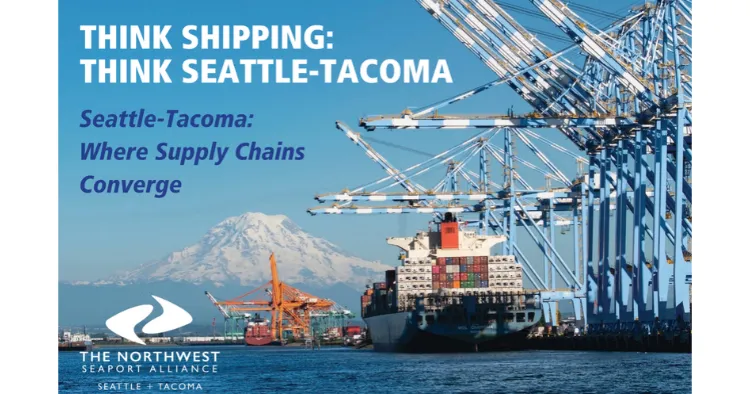
- THE NORTHWEST SEAPORT ALLIANCE HIGHLIGHTS TRANSPACIFIC GATEWAY ADVANTAGES AND INFRASTRUCTURE INVESTMENTS AT NOVEMBER 4 EXECUTIVE ROUNDTABLE IN HO CHI MINH CITY
- COSCO schedules: Vietnam - North America in Nov 2026
- COSCO updates Vietnam-North Europe sailing schedules in Nov 2026
- SITC updates Vietnam-Intra Asia sailing schedules in Nov 2026
- WorldACD: Chargeable Weight Up 2%, Air Rates Rise 4% in Week 42
- Nationwide Trucking Strike in Mexico: Supply Chain Disruption Warnings Raised
- Deployed Capacity on Asia–US and Asia–Europe Trades Hits Record Highs Over Golden Week 2026
- Hapag-Lloyd Warns of Potential Transport Disruptions in Kenya Due to Heavy Rainfall
- Panama Canal: Transits Rise 4.1% and Revenue Increases 16.6% in Fiscal 2026
Source: Phaata.com (According to Splash247)
► Find Better Freight Rates & Logistics Service Providers!


Featured News
- Hapag-Lloyd applies Peak Season Surcharge from East Asia to USA and Canada
- The world\'s largest container ships MSC Irina and MSC Loreto floated
- MSC (Mediterranean Shipping Company) - The world\'s leading container shipping lines
- Information you need to know about Maersk Line
- Top 10 export and import goods between Vietnam - Philippines in the first 5 months of 2020

 Market News
See more



 HOT PROMO
See more
2596
 FCL
 35 Days
 Freight cost

CÔNG TY TNHH CARDINAL GLOBAL LOGISTICS (VIETNAM)
 Premium
152
FCL
3 Days
Freight cost

CÔNG TY TNHH GIAO NHẬN TOÀN CẦU GS
507
FCL
40 Days
Freight cost

N.B.L INTERNATIONAL TRANSPORT CO., LTD
1540
 Other

INTERLOG CORP - CÔNG TY CỔ PHẦN GIAO NHẬN TIẾP VẬN QUỐC TẾ
2116
FCL
50 Days
Freight cost

NP LOGISTICS CO.,LTD
Why do thousands of businesses trust Phaata?
USERS/MONTH
LOGISTICS COMPANIES
REQUEST FOR QUOTEŚ
QUOTATIONS
VIETNAM LOGISTICS COMMUNITY
5 Steps to Get the Best Quote
Find a price quickly/Send a RFQ
Compare multiple options
Contact for Further Consultation
Negotiating prices/services
Management & rating
 Freight rates
Sea freight
- FCL
See more
37
6
Days Direct
- ₫15,990,000 / 20'GP
- ₫29,510,000 / 40'GP
- ₫29,510,000 / 40'HQ

CÔNG TY CỔ PHẦN TIẾP VẬN INTERCARGO
102
 136
14
Days Direct
- ₫19,053,360 / 20'GP
- ₫34,137,270 / 40'GP
- ₫34,137,270 / 40'HQ
- ₫35,725,050 / 45'HQ

MELODY LOGISTICS COMPANY LIMITED
143
14
Days Transit
- ₫3,307,875 / 20'GP
- ₫9,129,735 / 40'GP
- ₫9,129,735 / 40'HQ

GIA LINH LOGISTICS SERVICES CO., LTD. (G LINK Logistics)
112
15
Days Direct
- ₫23,816,700 / 20'GP
CÔNG TY TNHH GIAO NHẬN TOÀN CẦU GS
Sea freight
- LCL
See more
599
45
Days Transit
- Refund ₫131,570 /cbm

CÔNG TY TNHH LIÊN KẾT HOÀN HẢO (PERFECTLINK CO.,LTD)
3,000
7
Days Direct
- Refund ₫261,590 /cbm

CÔNG TY TNHH VẬN TẢI VÀ TIẾP VẬN TOÀN CẦU
5,574
 6,461
5
Days Direct
- ₫26,463 /cbm

CÔNG TY TNHH T&M FORWARDING - CHI NHÁNH HÀ NỘI
6,160
3
Days Direct
- Refund ₫926,205 /cbm

CÔNG TY CỔ PHẦN GIAO NHẬN VẬN TẢI HỒNG SƠN
 Air freight
- General cargo
See more
7,681
1
Days Direct
- 46,310 ₫/kg
N.B.L INTERNATIONAL TRANSPORT CO., LTD
9,813
1
Days Direct
- 161,424 ₫/kg
CÔNG TY CỔ PHẦN GIAO NHẬN VẬN TẢI HỒNG SƠN
12,209
10
Days Transit
- 264,630 ₫/kg

Phoenix Logistics Vietnam - chi nhánh TP. Hồ Chí Minh (Phoenix International Forwarding Vietnam )
13,639
1
Days Direct
- 185,241 ₫/kg

CÔNG TY TNHH THƯƠNG MẠI VÀ DỊCH VỤ FASTRANS
10,471

 Rail freight
- FCL
See more
9,039
5
Days Direct
- ₫44,987,100 / 40'HQ
- ₫44,987,100 / 45'HQ

CÔNG TY TNHH PHƯỚC TÁ
12,193
3
Days Direct
- ₫15,083,910 / 40'HQ

CÔNG TY CỔ PHẦN VẬN TẢI VÀ THƯƠNG MẠI ĐƯỜNG SẮT
21,903
7
Days Direct
- ₫48,956,550 / 20'GP
Công ty TNHH T&M Forwarding
20,394
5
Days Direct
- ₫7,145,010 / 20'GP
ASIAN EXPRESS LINE VIETNAM ( AEL VIET NAM )
11,295
10
Days Direct
- ₫9,262,050 / 20'GP

CÔNG TY CỔ PHẦN LOGISTICS QUỐC TẾ V&T
 Road freight
- FCL
See more
2,120
4
Day
- ₫5,000,000 / 40'GP

CÔNG TY CỔ PHẦN IGAP
14,097
1
Day
- ₫28,000,000 / 20'GP
- ₫28,000,000 / 40'GP
CÔNG TY TNHH THƯƠNG MẠI DỊCH VỤ VÀ KHO VẬN VIETTEL POST - TTC
114,825
2
Day
- ₫6,500,000 / 40'RF
- ₫6,500,000 / 40'RQ
- ₫6,500,000 / 45'RQ

CÔNG TY CP PROSHIP
Premium
182,995
1
Day
- ₫18,997,200 / 20'GP
- ₫18,997,200 / 40'GP

CÔNG TY CỔ PHẦN GIAO NHẬN VẬN TẢI CON ONG
269,389
3
Day
- ₫32,000,000 / 20'GP
- ₫64,000,000 / 40'GP
- ₫64,000,000 / 40'HQ
- ₫64,000,000 / 45'HQ

Công ty Cổ phần phát triển thương mại Thuận Đạt Việt Nam


