


Monday, 16/11/2026, 10:00 (GMT +7)
 10
The Northwest Seaport Alliance Strengthens U.S.–Vietnam Trade Connections Ahead of Executive Roundtable in Ho Chi Minh City
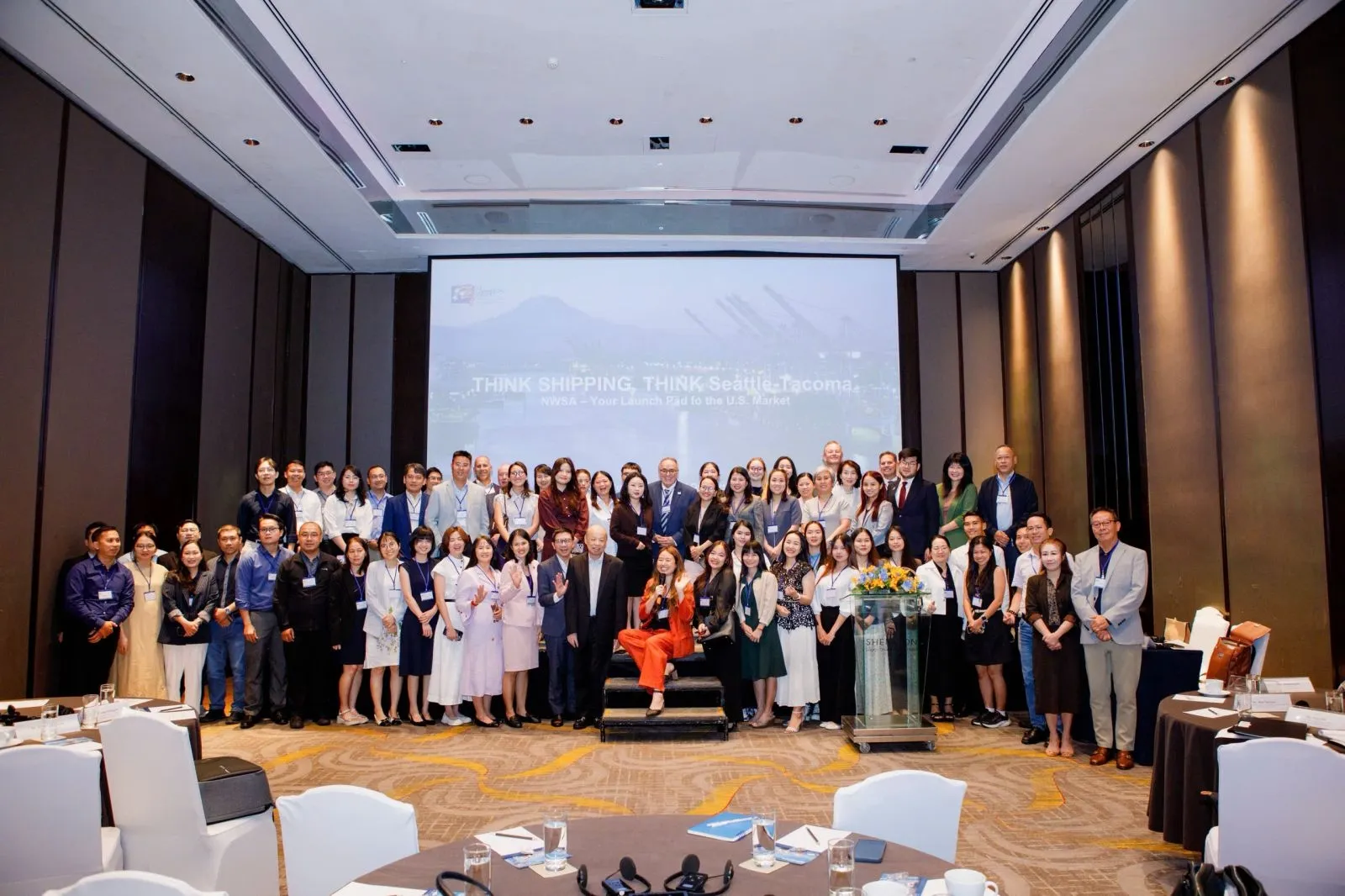
A memorable moment at THINK SHIPPING – THINK Seattle-Tacoma | November 4, 2026.
On Wednesday, November 4, 2026, NWSA will host an exclusive, invitation-only executive roundtable in Ho Chi Minh City under the theme “Seattle-Tacoma: Where Supply Chains Converge.” The event will bring together Vietnamese manufacturers, freight forwarders, beneficial cargo owners (BCOs), ocean carriers, and other supply chain professionals to explore opportunities to improve cargo movement, strengthen supply chain resilience, and expand commercial connections between Vietnam and the United States.
Discussions will focus on port efficiency, cold-chain logistics, intermodal rail connectivity, access to U.S. inland markets, and strategies for navigating evolving U.S. import requirements.
Vietnam: A Strategic Partner in Transpacific Trade
Vietnam is an important origin and destination market for cargo moving through the Seattle–Tacoma gateway. According to the NWSA cargo statistics cited for this article, approximately 90.5% of its foreign full container volume, equivalent to around 1.6 million twenty-foot equivalent units (TEUs), is linked to Asian markets.
Vietnamese shipping hubs feature prominently among the gateway's foreign origin ports:
-
Ho Chi Minh City: Ranked No. 4, with 86,129 TEUs annually.
-
Haiphong: Ranked No. 6, with 60,596 TEUs annually.
-
Cai Mep–Vung Tau: Contributing an additional 13,364 TEUs.
These figures highlight the importance of Vietnam's manufacturing and export sectors to Transpacific supply chains.
Major Vietnamese export categories moving through the gateway include furniture, apparel, footwear, electronics, small appliances, machinery, and vehicle parts. For Vietnamese exporters, access to reliable ocean services and efficient inland distribution can be an important consideration when serving U.S. customers.
For importers and logistics providers, the Seattle–Tacoma gateway offers an alternative route for evaluating cargo flows into the United States, particularly when considering destination markets across the Pacific Northwest and Midwest.
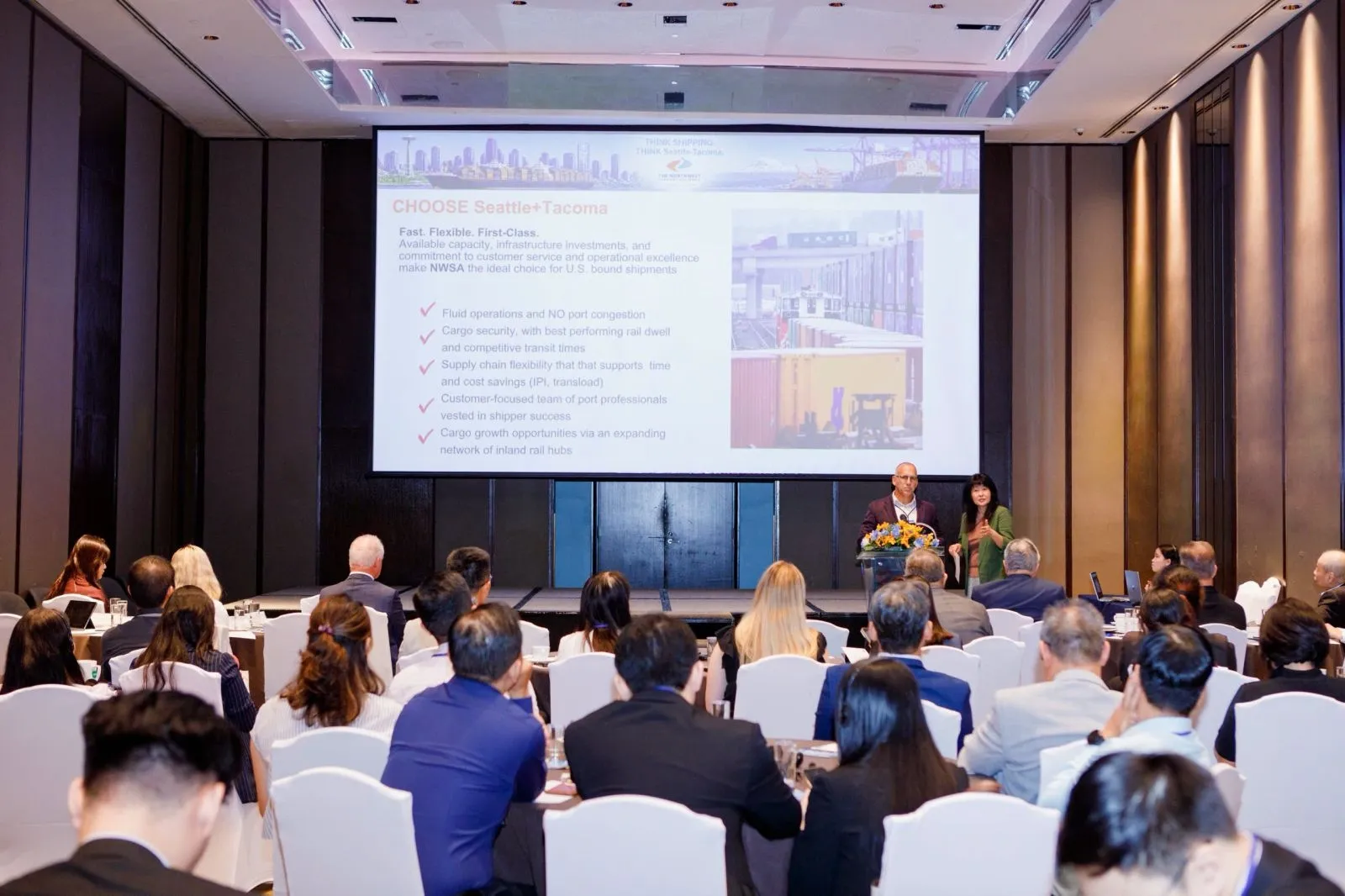
Mr. John Wolfe - Chief Executive Officer, NWSA and Ms. Tong Zhu - Chief Commercial & Strategy Officer, NWSA shared about the gateway advantages
Major Infrastructure Investments Support Larger Vessels and Efficient Cargo Movement
The NWSA and its terminal operating partners continue to invest in terminal infrastructure, navigation improvements, and cargo-handling capabilities across Seattle's North Harbor and Tacoma's South Harbor.
These investments are designed to accommodate evolving vessel requirements, improve terminal operations, and support the movement of containerized and specialized cargo.
Terminal 5: Modernization and Expanded Capacity
Located in Seattle Harbor and operated by SSA Terminals, Terminal 5 has undergone significant modernization, with reported investments exceeding $500 million.
The terminal features deep-water berths and four Super Post-Panamax cranes, with a reported height of 316 feet and an outreach of approximately 240 feet. Its infrastructure is designed to accommodate two ultra-large container vessels simultaneously.
A modernized gate complex has also expanded truck queuing capacity, with the aim of improving gate operations and reducing congestion during peak periods.
For shippers and freight forwarders, efficient terminal access can help improve coordination between vessel arrivals, trucking operations, and inland distribution.
Expanded Cold-Chain Capabilities
Refrigerated cargo is an important consideration for agricultural exporters, seafood suppliers, and businesses handling temperature-sensitive products.
Terminal 5's reported capacity of more than 1,500 reefer plugs supports the electrical requirements of refrigerated containers, providing infrastructure for temperature-controlled cargo handling.
These capabilities are relevant to Vietnamese businesses evaluating U.S. distribution channels for food products and other temperature-sensitive commodities. Actual routing decisions will depend on service availability, transit times, handling requirements, and the specific needs of each shipment.
Tacoma Harbor Navigation Improvement Project
The $295 million Tacoma Harbor Navigation Improvement Project is designed to deepen the Blair Waterway from 51 to 57 feet and widen sections of the navigation channel to approximately 450–865 feet.
The improvements are intended to accommodate larger, fully laden container vessels and enhance navigation capabilities within Tacoma Harbor.
East Blair Waterway Berth Development
The NWSA is partnering on a reported $200 million berth development at East Blair Waterway in Tacoma.
The project is intended to expand long-term terminal capacity and support the continued development of maritime operations in the Pacific Northwest.
Husky Terminal Expansion
At Husky Terminal in Tacoma, a reported $54 million grant-supported expansion program includes yard reconfiguration and additional refrigerated container infrastructure.
These improvements aim to streamline cargo handling, reduce operational bottlenecks, and support efficient vessel operations.
Together, these infrastructure initiatives reflect the continuing investment in the Seattle–Tacoma gateway's capacity, operational flexibility, and ability to serve diverse cargo requirements.
Direct Rail Connections Open Access to U.S. Inland Markets
Beyond port infrastructure, inland connectivity is an important consideration for businesses shipping cargo to destinations beyond the U.S. West Coast.
The NWSA gateway provides direct on-dock rail access through Class I rail operators BNSF Railway and Union Pacific Railroad. This connectivity enables containers to transfer between vessels and rail networks for onward movement to inland distribution centers and major commercial markets.
Relevant destinations include Chicago, Kansas City, Minneapolis, and markets throughout the Ohio Valley.
Compared with alternative routing options, Seattle–Tacoma may offer advantages for certain cargo flows, depending on the origin, destination, shipping service, rail schedule, and overall logistics costs.
The regional logistics ecosystem further supports these operations. More than 100 transload and warehouse facilities are reported to operate within 15 miles of NWSA terminals, providing options for cargo transfers, distribution, and inventory management.
For Vietnamese freight forwarders and importers, these connections create opportunities to evaluate port-to-door routing strategies, including the potential use of rail for cargo destined for U.S. inland markets.
Advancing Cleaner Maritime and Drayage Operations
Environmental performance is becoming an increasingly important consideration across international shipping and logistics. The NWSA's sustainability initiatives are guided by the Northwest Ports Clean Air Strategy, which sets a long-term ambition to eliminate emissions from seaport-related activities by 2050 or sooner.
Shore Power Infrastructure
Shore power allows compatible vessels to connect to electrical power while at berth, reducing the need to operate onboard auxiliary engines during port stays.
Terminal 5 completed its shore power installation in 2023, while Husky Terminal in Tacoma has also completed its shore power system. The latter welcomed Hapag-Lloyd's 9,000-TEU Kuala Lumpur Express for its inaugural shore power connection in June 2025, according to the supplied project information.
The NWSA is also advancing additional shore power infrastructure at Terminal 18, supported by a reported $8 million in federal funding, as well as at Washington United Terminal.
These initiatives form part of the broader effort to expand cleaner port operations and support the long-term transition toward lower-emission maritime activity.
Zero-Emission Drayage
The NWSA is also supporting the adoption of zero-emission trucks through its Zero-Emission Drayage Incentive Program (ZEDIP), backed by a reported $6.24 million in state funding.
The program includes plans to deploy zero-emission heavy-duty drayage trucks and develop charging infrastructure near SeaTac, including a depot designed to accommodate up to 250 vehicles.
By supporting cleaner short-haul cargo transportation, these initiatives complement broader efforts to improve the environmental performance of port-related logistics.
For Vietnamese businesses working with U.S. logistics partners, these developments provide additional context for evaluating sustainability initiatives across international supply chains.
November 4 Executive Roundtable to Connect Vietnamese Businesses with U.S. Port Leadership
The upcoming Ho Chi Minh City roundtable will provide Vietnamese logistics and manufacturing leaders with an opportunity to engage directly with NWSA executives and discuss practical considerations affecting Transpacific cargo movement.
The event will address gateway selection, access to U.S. inland markets, tailored logistics solutions, tariff and import compliance considerations, and supply chain resilience.
Event Details
-
Event: Seattle-Tacoma: Where Supply Chains Converge
-
Date: Wednesday, November 4, 2026
Featured Speakers and Delegation
The confirmed delegation and featured participants include:
-
Ms. Christine Kelley — Principal Commercial Officer, U.S. Consulate General in Ho Chi Minh CityMr. John Wolfe — Chief Executive Officer, The Northwest Seaport Alliance
-
Mr. Dick Marzano — NWSA Managing Member Co-Chair and Port of Tacoma Commissioner
-
Mr. Sam Cho — NWSA Managing Member and Port of Seattle Commissioner
-
Ms. Tong Zhu — Chief Commercial & Strategy Officer, NWSA; Event Host and Moderator
-
Mr. Don Esterbrook — Deputy CEO, NWSA
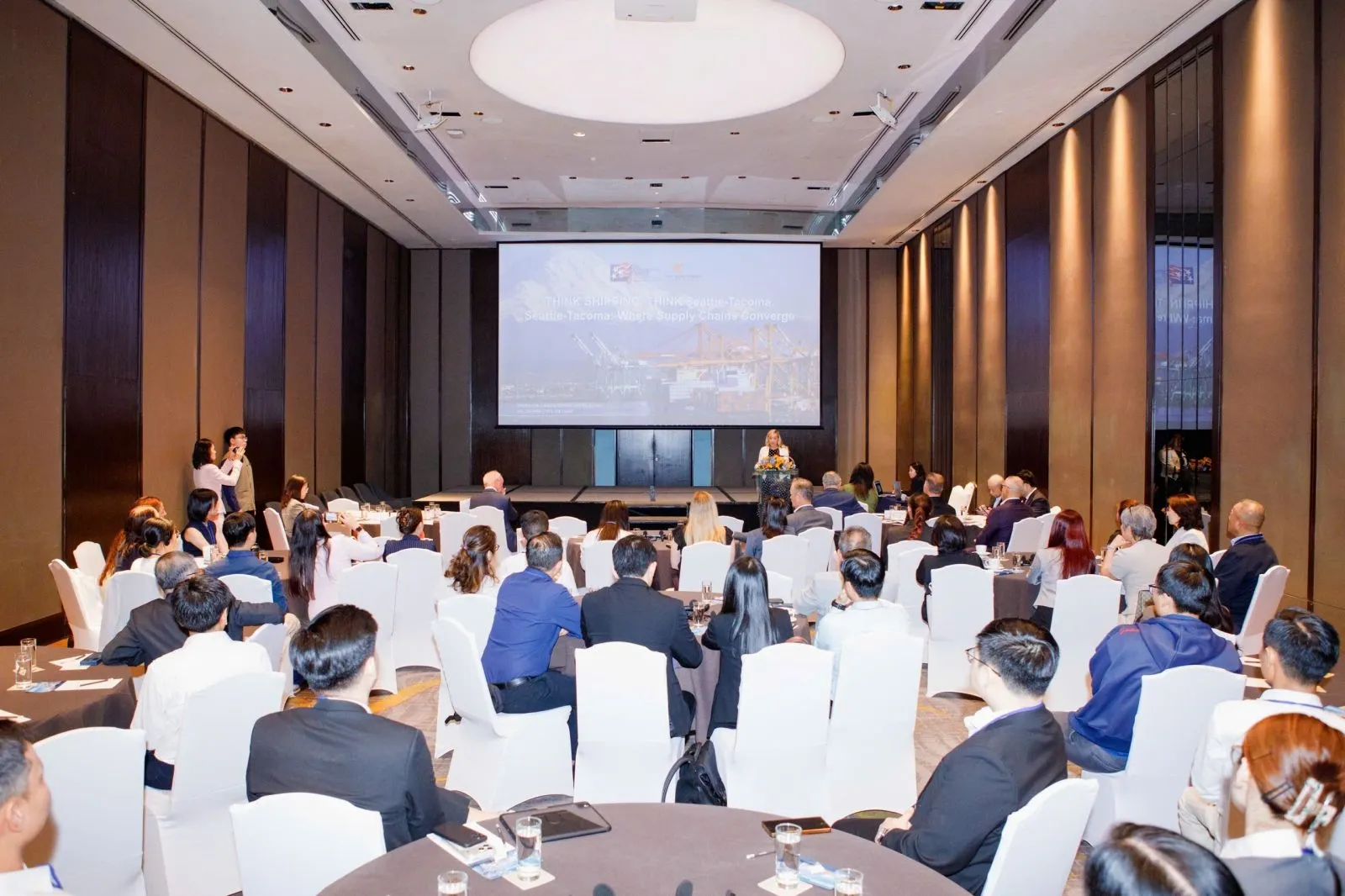
Opening Remarks by Ms. Christine Kelley - Principal Commercial Officer at the U.S. Commercial Service, U.S. Consulate General in Ho Chi Minh City.
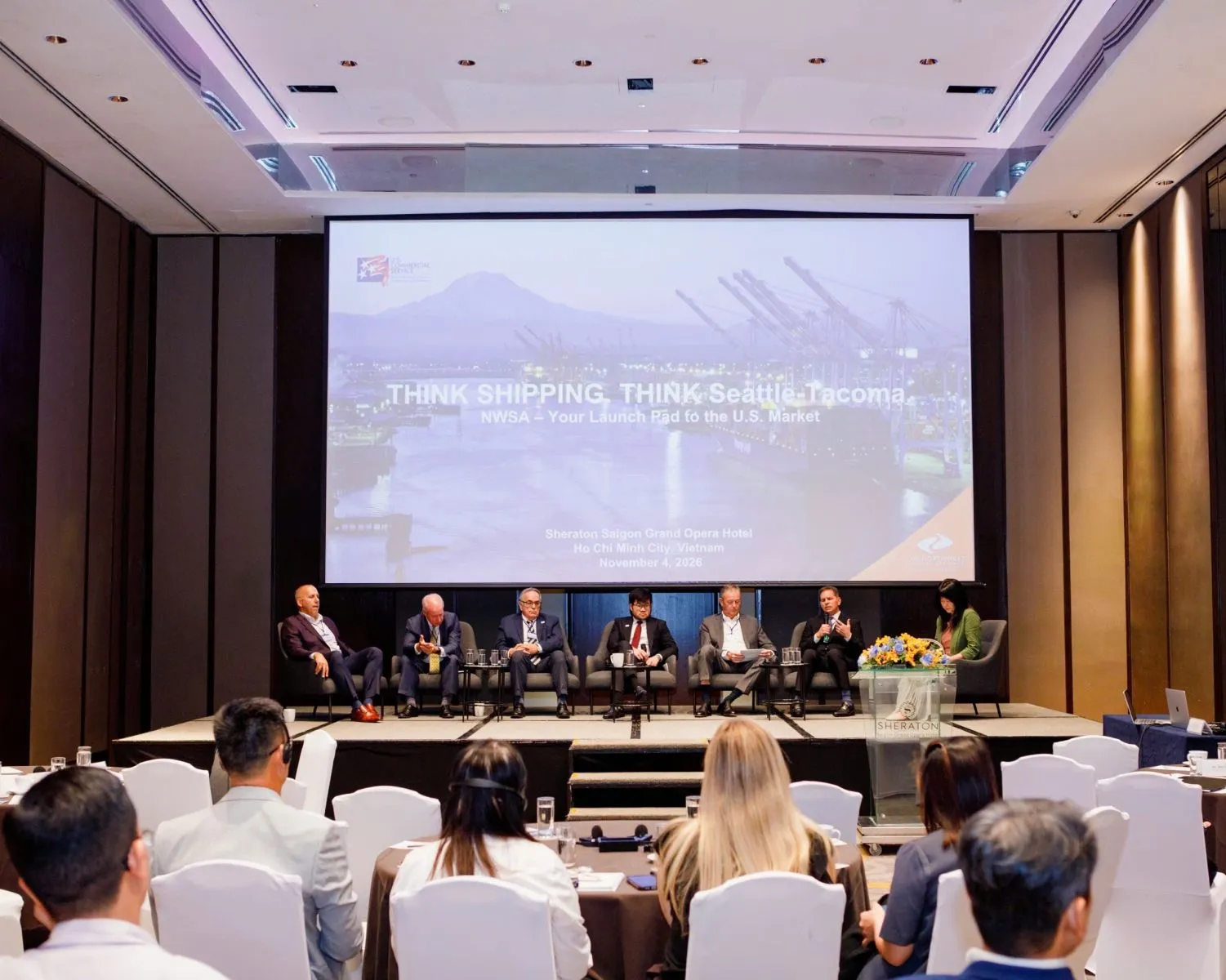
Participation is by invitation only. Interested businesses should contact the event organizers for registration and participation details.
Strengthening U.S.–Vietnam Trade Connections
The Seattle–Tacoma gateway combines maritime infrastructure, rail connectivity, regional warehousing, and cargo-handling capabilities to serve international supply chains connecting Asia with the United States.
For Vietnamese manufacturers, exporters, importers, and freight forwarders, understanding these capabilities can help inform routing decisions, distribution planning, and discussions with U.S. logistics partners.
The November 4 executive roundtable represents an opportunity to explore these issues directly with NWSA leadership and strengthen commercial dialogue between Vietnam and the Pacific Northwest.
As businesses continue to evaluate supply chain resilience, transportation efficiency, and access to U.S. markets, collaboration among ports, carriers, freight forwarders, and cargo owners will remain important to building effective Transpacific trade networks.
About The Northwest Seaport Alliance
The Northwest Seaport Alliance is the marine cargo operating partnership of the Port of Seattle and the Port of Tacoma. It manages marine cargo terminals across Seattle and Tacoma harbors, serving containerized, breakbulk, automobile, and bulk cargo markets and connecting international trade with businesses and consumers throughout the United States.
Media & Organizational Contact:
-
Organization: The Northwest Seaport Alliance Vietnam Representative
-
Website: nwseaportalliance.com
-
Phone: (+84) 902 32 7978
-
Email: [email protected] | [email protected] | [email protected]


Featured News
- Hapag-Lloyd applies Peak Season Surcharge from East Asia to USA and Canada
- The world\'s largest container ships MSC Irina and MSC Loreto floated
- MSC (Mediterranean Shipping Company) - The world\'s leading container shipping lines
- Information you need to know about Maersk Line
- Top 10 export and import goods between Vietnam - Philippines in the first 5 months of 2020

 Market News
See more

 HOT PROMO
See more
111
 FCL
 10 Days
 Freight cost

NP LOGISTICS CO.,LTD
11381
FCL
35 Days
Freight cost

CÔNG TY TNHH CARDINAL GLOBAL LOGISTICS (VIETNAM)
 Premium
1785
FCL
15 Days
Freight cost

Compass Logistics
Premium
5370
FCL
38 Days
Freight cost

CHI NHÁNH THÀNH PHỒ HỒ CHÍ MINH - CÔNG TY TNHH HECNY SHIPPING VIỆT NAM
7001
 Other

INTERLOG CORP - CÔNG TY CỔ PHẦN GIAO NHẬN TIẾP VẬN QUỐC TẾ
Why do thousands of businesses trust Phaata?
USERS/MONTH
LOGISTICS COMPANIES
REQUEST FOR QUOTEŚ
QUOTATIONS
VIETNAM LOGISTICS COMMUNITY
5 Steps to Get the Best Quote
Find a price quickly/Send a RFQ
Compare multiple options
Contact for Further Consultation
Negotiating prices/services
Management & rating
 Freight rates
Sea freight
- FCL
See more
34
20
Days Direct
- ₫51,602,850 / 20'GP
- ₫60,864,900 / 40'GP
- ₫60,864,900 / 40'HQ
- ₫60,864,900 / 45'HQ

HAFA TRADING & LOGISTICS COMPANY LIMITED
38
25
Days Transit
- ₫63,140,718 / 20'GP
- ₫114,796,494 / 40'GP
- ₫114,796,494 / 40'HQ

CÔNG TY TNHH GRAND OCEAN LINE VIỆT NAM
53
40
Days Transit
- ₫61,791,105 / 20'GP
- ₫97,119,210 / 40'HQ
Compass Logistics
Premium
629
3
Days Direct
- ₫3,175,560 / 20'GP
- ₫7,145,010 / 40'GP
- ₫7,145,010 / 40'HQ

GIA LINH LOGISTICS SERVICES CO., LTD. (G LINK Logistics)
583
6
Days Transit
- ₫14,554,650 / 20'GP
- ₫29,109,300 / 40'HQ
CÔNG TY TNHH GIAO NHẬN TOÀN CẦU GS
Sea freight
- LCL
See more
690
12
Days Direct
- Refund ₫264,630 /cbm

CÔNG TY CỔ PHẦN SILVIET
1,044
 2,591
13
Days Direct
- ₫0 /cbm
CÔNG TY TNHH DỊCH VỤ VẬN TẢI BIỂN VESTAL
4,230
45
Days Transit
- Refund ₫131,570 /cbm

CÔNG TY TNHH LIÊN KẾT HOÀN HẢO (PERFECTLINK CO.,LTD)
5,933
7
Days Direct
- Refund ₫261,590 /cbm
CÔNG TY TNHH VẬN TẢI VÀ TIẾP VẬN TOÀN CẦU
 Air freight
- General cargo
See more
2,182
 10,783
1
Days Direct
- 46,310 ₫/kg

N.B.L INTERNATIONAL TRANSPORT CO., LTD
12,949
1
Days Direct
- 161,424 ₫/kg

CÔNG TY CỔ PHẦN GIAO NHẬN VẬN TẢI HỒNG SƠN
15,284
10
Days Transit
- 264,630 ₫/kg

Phoenix Logistics Vietnam - chi nhánh TP. Hồ Chí Minh (Phoenix International Forwarding Vietnam )
14,610
1
Days Direct
- 185,241 ₫/kg

CÔNG TY TNHH THƯƠNG MẠI VÀ DỊCH VỤ FASTRANS
 Rail freight
- FCL
See more
11,668
5
Days Direct
- ₫44,987,100 / 40'HQ
- ₫44,987,100 / 45'HQ
CÔNG TY TNHH PHƯỚC TÁ
15,199
3
Days Direct
- ₫15,083,910 / 40'HQ
CÔNG TY CỔ PHẦN VẬN TẢI VÀ THƯƠNG MẠI ĐƯỜNG SẮT
24,786
7
Days Direct
- ₫48,956,550 / 20'GP
Công ty TNHH T&M Forwarding
23,241
5
Days Direct
- ₫7,145,010 / 20'GP
ASIAN EXPRESS LINE VIETNAM ( AEL VIET NAM )
11,871
10
Days Direct
- ₫9,262,050 / 20'GP

CÔNG TY CỔ PHẦN LOGISTICS QUỐC TẾ V&T
 Road freight
- FCL
See more
582
6
Hour
- ₫10,500,000 / 40'GP
- ₫10,500,000 / 40'HQ
Công ty TNHH Giao nhận quốc tế HP LINK
641
 16,968
1
Day
- ₫28,000,000 / 20'GP
- ₫28,000,000 / 40'GP
CÔNG TY TNHH THƯƠNG MẠI DỊCH VỤ VÀ KHO VẬN VIETTEL POST - TTC
117,690
2
Day
- ₫6,500,000 / 40'RF
- ₫6,500,000 / 40'RQ
- ₫6,500,000 / 45'RQ

CÔNG TY CP PROSHIP
Premium
184,166
1
Day
- ₫18,997,200 / 20'GP
- ₫18,997,200 / 40'GP

CÔNG TY CỔ PHẦN GIAO NHẬN VẬN TẢI CON ONG


