

Tuesday, 16/06/2026, 15:59 (GMT +7)
 468
468
Maritime Risks in the Strait of Hormuz Remain Severe Despite Diplomatic Progress
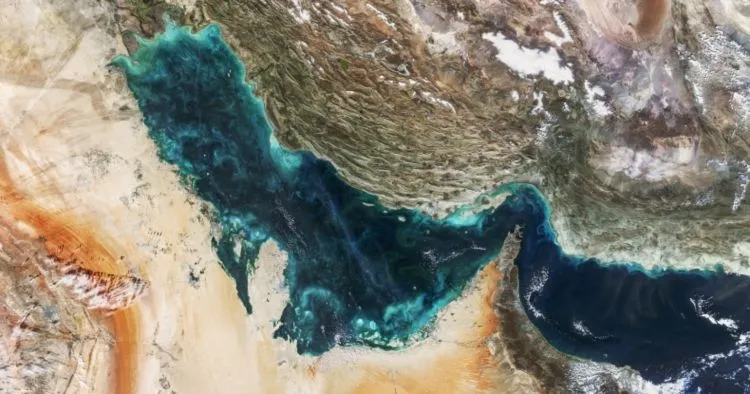
The Strait of Hormuz remains one of the world's highest-risk maritime chokepoints despite recent diplomatic efforts aimed at reopening this strategically important waterway. Reports of explosions in the area, continued reliance on military assistance for vessel movements, and uncertainty surrounding the timeline for a full resumption of commercial shipping all indicate that the situation remains highly complex.
On Monday, multiple explosions were reported in the vicinity of the strait. At the same time, reports emerged that Iranian forces had fired upon a vessel attempting to transit the waterway. Industry sources indicated that vessels lacking authorization from the Persian Gulf Security Authority (PGSA) are still unable to transit under normal procedures, while some ships are operating under the protection of U.S. military escorts.
The U.S. military has also issued guidance advising shipping companies and vessel operators not to dispatch vessels through the Strait of Hormuz until a formal peace agreement between Washington and Tehran is officially signed. Meanwhile, the Joint Maritime Information Center (JMIC), part of the U.S.-led Combined Maritime Forces, continues to classify the threat level in the region as "severe" despite encouraging diplomatic developments.
A JMIC representative noted: "Mariners should expect increased naval presence, enhanced force protection postures, potential VHF hailing and congestion near anchorage areas."
Positive Signals from the Diplomatic Front
Despite ongoing security concerns, the market has begun to see signs that maritime operations may gradually resume.
Iranian state media reported that several Iranian vessels had successfully transited through the U.S. naval exclusion zone in the Gulf of Oman following a preliminary agreement between the two sides.
Speaking on the sidelines of the G7 Summit in France, U.S. President Donald Trump suggested that shipping activity was gradually resuming.
He stated: "The strait is already partially open. They are doing a little hunting for a couple of mines that they’ve already found."
President Trump also commented: "Ships are starting to go out. On Friday, it’ll be completely open."
Meanwhile, Vice President JD Vance indicated that an official announcement could come sooner than expected, suggesting that details of the agreement may be released before the formal signing takes place.
Market Participants Remain Cautious
In contrast to the optimism expressed by political leaders, the global shipping community continues to take a cautious approach.
Charu Chanana, Chief Investment Strategist at Saxo Markets, said: "Even as the market reacts to Hormuz opening headlines cleanly, the operational reality is likely to be messier."
According to Chanana, several practical obstacles remain: "Mine-clearing, insurance costs, port congestion and the risk of geopolitical spoilers could all keep barrels moving more slowly than the headline suggests."
Shipping broker BRS shares a similar view, arguing that even if a formal agreement is signed and remains in force, the restoration of traffic through Hormuz will likely occur in stages.
In its latest market assessment, BRS stated: "All told, if the deal is signed on Friday and then holds, we suggest that it should take four to five months for maritime traffic to return to normal in the strait."
This suggests that a full recovery of shipping activity through Hormuz is unlikely in the near term.
Biofouling Emerges as a New Operational Challenge After More Than 100 Days of Disruption
Even if security conditions improve, the shipping industry faces another significant technical challenge: biofouling.
Current estimates indicate that more than 500 vessels have been stranded or forced to wait at anchor in the Gulf region since the crisis began in late February. Many ships have remained idle or drifting for months in one of the world's hottest marine environments.
Sea surface temperatures in both the Persian Gulf and Gulf of Oman frequently exceed 30°C during the summer months, creating ideal conditions for the growth of barnacles, algae, biofilms, and other marine organisms on vessel hulls.
Under normal operating conditions, anti-fouling coatings are designed to perform effectively when vessels maintain regular sailing speeds. However, prolonged periods at anchor or reduced operational activity significantly diminish the effectiveness of these coatings, increasing the likelihood of marine growth accumulation.
Industry studies have shown that even moderate hull fouling can increase fuel consumption by 15% to 30%, with more severe cases resulting in even greater inefficiencies.
As a result, vessel operators could face substantially higher fuel costs and overall operating expenses. Shipping lines hoping to rapidly redeploy vessels once the market reopens may instead encounter increased fuel consumption and reduced operational efficiency during the early stages of recovery.
Compliance Challenges at Destination Ports
In addition to higher operating costs, biofouling creates significant regulatory compliance risks.
Australia, New Zealand, and several jurisdictions in the United States enforce strict biosecurity regulations aimed at preventing the introduction of invasive marine species through vessel hulls.
Ships that have remained idle in the Gulf region for extended periods may face:
● Underwater hull inspections
● Mandatory hull cleaning requirements
● Delays in port clearance procedures
● Operational restrictions until regulatory requirements are fully satisfied
This challenge is particularly significant given the relatively limited availability of hull-cleaning and underwater inspection services across the Middle East. Should Hormuz fully reopen and large numbers of vessels simultaneously return to service, demand for biofouling inspections and remediation could surge sharply, placing substantial pressure on regional marine service providers.
The Market Still Needs More Time
Although prospects for reopening the Strait of Hormuz are becoming increasingly tangible, most shipping companies are not yet prepared to declare the crisis over.
From mine-clearing operations and maritime security assessments to fleet redeployment and the management of operational consequences such as biofouling, the global shipping industry still faces considerable work before this critical maritime artery can return to stable operations.
Even under the most optimistic scenario, many industry experts believe it will take several more months before shipping volumes through Hormuz recover meaningfully, while a return to pre-crisis activity levels may ultimately become a story for 2027 rather than 2026.
See more:
- Global Air Cargo Volumes Rebound as Freight Rates Ease
- CMA CGM Introduces Peak Season Surcharge (PSS) on China–West Africa Trade
- Hormuz Ceasefire: Shipping Market Cautiously Watches Developments
- Ocean Alliance’s AEU7 Service Adds Gdansk Port, Expanding Europe–Asia Connectivity
- International Shipping and Logistics Market Update Week 24/2026 | Phaata
- Decoding Gemini’s Strategy: Reducing North Europe Capacity While Expanding Its Mediterranean Presence
- U.S. Container Imports Declined 5.1% in April 2026
- COSCO schedules: Vietnam - North America in Jun 2026
- COSCO updates Vietnam-Intra Asia sailing schedules in Jun 2026
- COSCO updates Vietnam-North Europe sailing schedules in Jun 2026
- SITC updates Vietnam-Intra Asia sailing schedules in Jun 2026
Source: Phaata.com (According to Splash247)
► Find Better Freight Rates & Logistics Service Providers!


Featured News
- Hapag-Lloyd applies Peak Season Surcharge from East Asia to USA and Canada
- The world\'s largest container ships MSC Irina and MSC Loreto floated
- MSC (Mediterranean Shipping Company) - The world\'s leading container shipping lines
- Information you need to know about Maersk Line
- Top 10 export and import goods between Vietnam - Philippines in the first 5 months of 2020

 Market News
See more
_-_Copy_-_Copy.webp)
.webp)

 HOT PROMO
See more
483
 FCL
FCL
 20 Days
 Freight cost

N.B.L INTERNATIONAL TRANSPORT CO., LTD
1415
FCL
21 Days
Freight cost
MG LOGISTICS JSC
3181
FCL
28 Days
Freight cost

CÔNG TY TRÁCH NHIỆM HỮU HẠN DT LOGISTICS (VN)
3801
FCL
28 Days
Freight cost

Công Ty TNHH Quanterm Logistics Vietnam
3099
FCL
33 Days
Freight cost

CÔNG TY TNHH TIẾP VẬN TOÀN CẦU KM
Why do thousands of businesses trust Phaata?
USERS/MONTH
LOGISTICS COMPANIES
REQUEST FOR QUOTEŚ
QUOTATIONS
VIETNAM LOGISTICS COMMUNITY
5 Steps to Get the Best Quote
Find a price quickly/Send a RFQ
Compare multiple options
Contact for Further Consultation
Negotiating prices/services
Management & rating
 Freight rates
Sea freight
- FCL
See more
329
7
Days Direct
- ₫529,260 / 20'GP
- ₫3,704,820 / 40'GP
- ₫3,704,820 / 40'HQ
- ₫4,631,025 / 45'HQ

MELODY LOGISTICS COMPANY LIMITED
386
40
Days Transit
- ₫303,557,073 / 40'RF

GIA LINH LOGISTICS SERVICES CO., LTD. (G LINK Logistics)
422
25
Days Transit
- ₫142,900,200 / 20'GP
- ₫195,826,200 / 40'GP
- ₫195,826,200 / 40'HQ

OPL LOGISTICS
452
 275
20
Days Transit
275
20
Days Transit
- ₫29,884,500 / 20'GP
- ₫31,189,500 / 40'GP
- ₫31,189,500 / 40'HQ

CÔNG TY CỔ PHẦN TIẾP VẬN INTERCARGO
Sea freight
- LCL
See more
723
3
Days Direct
- Refund ₫926,205 /cbm

CÔNG TY CỔ PHẦN GIAO NHẬN VẬN TẢI HỒNG SƠN
1,103
1,897
3
Days Direct
- ₫132,315 /cbm
CÔNG TY TRÁCH NHIỆM HỮU HẠN DT LOGISTICS (VN)
1,997
3
Days Direct
- ₫0 /cbm

CÔNG TY TNHH VẬN TẢI VÀ TIẾP VẬN TOÀN CẦU
3,899
 Air freight
- General cargo
Air freight
- General cargo
See more
2,178
1
Days Direct
- 46,310 ₫/kg
N.B.L INTERNATIONAL TRANSPORT CO., LTD
2,937
1
Days Direct
- 161,424 ₫/kg
CÔNG TY CỔ PHẦN GIAO NHẬN VẬN TẢI HỒNG SƠN
5,792
10
Days Transit
- 264,630 ₫/kg

Phoenix Logistics Vietnam - chi nhánh TP. Hồ Chí Minh (Phoenix International Forwarding Vietnam )
7,462
1
Days Direct
- 185,241 ₫/kg

CÔNG TY TNHH THƯƠNG MẠI VÀ DỊCH VỤ FASTRANS
8,834

 Rail freight
- FCL
Rail freight
- FCL
See more
3,540
5
Days Direct
- ₫44,987,100 / 40'HQ
- ₫44,987,100 / 45'HQ

CÔNG TY TNHH PHƯỚC TÁ
5,378
3
Days Direct
- ₫15,083,910 / 40'HQ

CÔNG TY CỔ PHẦN VẬN TẢI VÀ THƯƠNG MẠI ĐƯỜNG SẮT
15,705
7
Days Direct
- ₫48,956,550 / 20'GP

Công ty TNHH T&M Forwarding
14,460
5
Days Direct
- ₫7,145,010 / 20'GP

ASIAN EXPRESS LINE VIETNAM ( AEL VIET NAM )
9,901
10
Days Direct
- ₫9,262,050 / 20'GP

CÔNG TY CỔ PHẦN LOGISTICS QUỐC TẾ V&T
 Road freight
- FCL
Road freight
- FCL
See more
1,655
4
Day
- ₫5,000,000 / 40'GP

CÔNG TY CỔ PHẦN IGAP
4,302
1
Day
- ₫28,000,000 / 20'GP
- ₫28,000,000 / 40'GP

CÔNG TY TNHH THƯƠNG MẠI DỊCH VỤ VÀ KHO VẬN VIETTEL POST - TTC
105,615
2
Day
- ₫6,500,000 / 40'RF
- ₫6,500,000 / 40'RQ
- ₫6,500,000 / 45'RQ

CÔNG TY CP PROSHIP
 Premium
174,248
1
Day
Premium
174,248
1
Day
- ₫18,997,200 / 20'GP
- ₫18,997,200 / 40'GP

CÔNG TY CỔ PHẦN GIAO NHẬN VẬN TẢI CON ONG
263,718
3
Day
- ₫32,000,000 / 20'GP
- ₫64,000,000 / 40'GP
- ₫64,000,000 / 40'HQ
- ₫64,000,000 / 45'HQ

Công ty Cổ phần phát triển thương mại Thuận Đạt Việt Nam


