

Wednesday, 16/09/2026, 11:35 (GMT +7)
 242
242
Prolonged Gulf Crisis Raises Biofouling Risks for Idled Vessels
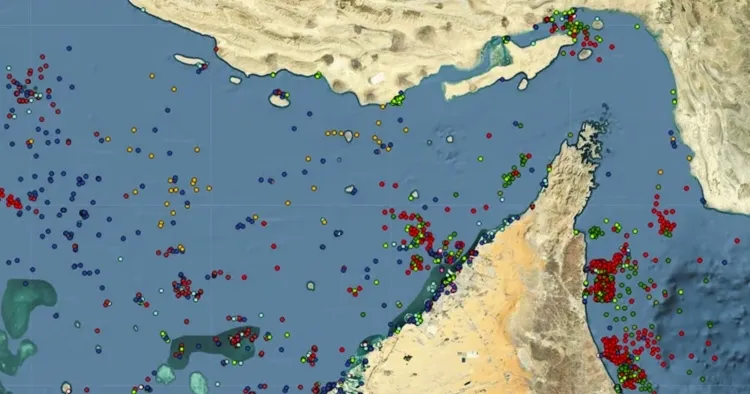
Source: Maritime Executive / Courtesy Pole Star Global
Ship operators are facing unusual operating conditions in the Gulf shipping market. Prolonged disruption and instability have left a large number of vessels anchored for extended periods across the Arabian Gulf.
According to AIS data collected by MarineTraffic and published by Weathernews, as of mid-June 2026, 958 vessels were affected, with 63% having remained at anchor for 100 days or more. The scale and duration of these anchorage periods indicate that the disruption is having a significant impact on vessel operations in the region.
Beyond the direct impact on schedules and operational performance, prolonged periods at anchor create favorable conditions for marine organisms to grow on the submerged sections of a vessel’s hull. This can increase fuel consumption and affect operational efficiency, while also creating biofouling management requirements when vessels return to service and call at ports in jurisdictions with stringent regulations.
How Do Prolonged Anchorage Periods Increase Biofouling?
The process of marine growth forming on a vessel’s hull can begin just minutes after the hull surface comes into contact with seawater. Initially, a layer of organic matter and microorganisms forms on the surface. This biofilm then develops further as bacteria, algae and other microorganisms become established.
Over the following weeks or months, larger organisms such as barnacles, mussels, tubeworms, sea squirts and seaweed can attach to the hull. If left uncontrolled, this layer of marine growth increases surface roughness and hydrodynamic drag, affecting vessel operating efficiency.
For shipowners, the consequences can include lower operating speeds, higher engine loads, increased fuel consumption and higher emissions. A 2025 survey by Jotun of 1,000 shipowners and operators found that 50.4% of respondents had experienced higher fuel consumption and reduced operational performance due to ineffective biofouling management.
Importantly, the survey reflects vessel operating conditions in general and does not specifically measure the impact of prolonged anchorage periods such as those currently occurring in the Gulf.
Gulf Conditions Favor Marine Growth
The Arabian Gulf presents a number of conditions that can support marine growth on vessel hulls. Relatively high water temperatures can accelerate the growth of algae, barnacles and other marine organisms. Port and industrial activity, together with nutrient-rich waters in some coastal areas, may also create favorable conditions for marine growth.
Vessels waiting for cargo, operational instructions, security conditions or berth availability for extended periods may therefore face an increased risk of accumulating biofouling on their submerged hulls.
Limited vessel movement may also reduce the effectiveness of an antifouling system, depending on the type of coating, operating conditions and system specifications. High salinity in the Gulf may limit the growth of certain species, but it does not eliminate the risk of biofouling.
Biofouling Can Become a Compliance Issue
A biofouled vessel can act as a vector for the spread of invasive species to other ecosystems. This is one of the reasons why an increasing number of countries are introducing biofouling management requirements for ships.
According to Jotun’s 2025 survey, 41% of respondents said they had faced penalties related to biofouling, while 38% had been denied port access for failing to meet relevant requirements. In addition, 49% said they had avoided ports with strict biofouling regulations.
Several markets have established relatively specific requirements:
● Australia: Under the Biosecurity Act 2015, shipowners and operators can demonstrate that biofouling risks are being managed through measures such as cleaning the hull within 30 days before arrival, maintaining a Biofouling Management Plan and Record Book, or applying an approved management method.
● New Zealand: Vessels arriving in New Zealand must provide evidence of biofouling management in accordance with the Craft Risk Management Standard and meet pre-arrival declaration requirements. Vessels that do not meet the requirements may be subject to additional treatment measures, including hull cleaning or other control measures.
● United States: The state of California applies biofouling management requirements to vessels of 300 GT or more, including a Biofouling Management Plan and Record Book. Vessels that have remained idle for extended periods may be subject to additional review or monitoring by the authorities.
● Brazil: NORMAM-401, introduced in 2025 with new requirements taking effect from June 2026, establishes biofouling management requirements for vessels operating in Brazilian waters. The requirements focus on controlling the level of biofouling and reducing the risk of introducing invasive species into local ecosystems.
Security Risks Also Need to Be Considered
Prolonged anchorage also creates vessel security concerns. Vessels that remain idle for extended periods may become targets for unauthorized parties seeking access to their underwater hulls and attempting to carry out illicit activities.
In some cases, organized criminal groups may exploit underwater inspection or cleaning operations to attach illicit cargo to hard-to-observe areas such as sea chests, rudder trunks or other underwater hull structures. The cargo may then be retrieved once the vessel reaches its next port.
Cases documented by law enforcement agencies indicate that this is a risk that should be incorporated into vessel security management procedures, particularly when vessels remain at anchor for extended periods or undergo underwater work.
Before Returning the Vessel to Service
For vessels that have remained at anchor for several months, the condition of the hull should be assessed before the vessel is returned to service. Signs such as reduced speed, increased fuel consumption, higher engine loads or declining operational performance may warrant an assessment of the extent of biofouling.
Underwater inspections using divers or remotely operated vehicles (ROVs) can help assess hull condition and determine whether cleaning is required. The scope and method of cleaning should be selected based on the actual condition of the hull, the antifouling system and environmental requirements at the port where the work is carried out.
Underwater inspections should also be combined with appropriate security-control procedures to detect any objects or cargo that may have been illegally attached to the vessel’s hull.
Prolonged disruption in the Gulf could therefore have consequences extending beyond vessel schedules and day-to-day operations. For shipowners, operators and charterers, assessing hull condition before reactivation and verifying biofouling management requirements at the next port of call at an early stage can help limit operational risks.
Security-control measures should also remain in place throughout underwater inspections and cleaning operations to reduce the risk of invasive species being spread, maintain vessel operating efficiency and minimize compliance issues when vessels return to service.
See more:
- SITC – CONNECTING CAMBODIA WITH VIETNAM AND THE WORLD
- COSCO Shipping Heavy Industry Begins A-Share Listing Process in Shanghai
- International Shipping and Logistics Market Update Week 37/2026 | Phaata
- US-Iran Conflict Puts Growing Pressure on Maritime Operations in the Strait of Hormuz
- 18 Maritime Nations Warn of a “Structural Shift” in Global Trade
- Rotterdam World Gateway Completes €500 Million Financing for Expansion Project
- Maersk Updates PSS for Mediterranean–North America Trade
- Hapag-Lloyd and FIMI Given 30 More Days to Restructure ZIM Deal
- International Shipping and Logistics Market Update Week 36/2026 | Phaata
- Maersk and ONE Hike Environmental Surcharges on Asia–Europe Trades Effective October 2026
- German Seaports: Over 6,000 Port Workers Reject ZDS's 5.1% Wage Offer; Threat of Fresh Strikes Remains on the Table
- Port Strike in the Netherlands on September 4: Rotterdam Could Face Nearly Eight Hours of Disrupted Vessel Handling
- COSCO schedules: Vietnam - North America in Sep 2026
- SITC updates Vietnam-Intra Asia sailing schedules in Sep 2026
Source: Phaata.com (According to Maritime Executive)
► Find Better Freight Rates & Logistics Service Providers!


Featured News
- Hapag-Lloyd applies Peak Season Surcharge from East Asia to USA and Canada
- The world\'s largest container ships MSC Irina and MSC Loreto floated
- MSC (Mediterranean Shipping Company) - The world\'s leading container shipping lines
- Information you need to know about Maersk Line
- Top 10 export and import goods between Vietnam - Philippines in the first 5 months of 2020

 Market News
See more
.webp)
.webp)
.webp)
.webp)

 HOT PROMO
See more
1149
 FCL
FCL
 12 Days
 Freight cost

Compass Logistics
 Premium
2024
FCL
12 Days
Freight cost
Premium
2024
FCL
12 Days
Freight cost
ASIAN EXPRESS LINE VIETNAM ( AEL VIET NAM )
3053
FCL
6 Days
Freight cost

CÔNG TY CỔ PHẦN TIẾP VẬN INTERCARGO
3875
FCL
5 Days
Freight cost

CÔNG TY TNHH VẬN CHUYỂN QUỐC TẾ N.B.L
4226
FCL
20 Days
Freight cost

N.B.L INTERNATIONAL TRANSPORT CO., LTD
Why do thousands of businesses trust Phaata?
USERS/MONTH
LOGISTICS COMPANIES
REQUEST FOR QUOTEŚ
QUOTATIONS
VIETNAM LOGISTICS COMMUNITY
5 Steps to Get the Best Quote
Find a price quickly/Send a RFQ
Compare multiple options
Contact for Further Consultation
Negotiating prices/services
Management & rating
 Freight rates
Sea freight
- FCL
See more
246
9
Days Transit
- ₫4,895,655 / 20'GP
- ₫8,997,420 / 40'GP
- ₫8,997,420 / 40'HQ
- ₫10,452,885 / 45'HQ

MELODY LOGISTICS COMPANY LIMITED
270
5
Days Direct
- ₫15,660,000 / 20'GP
CÔNG TY CỔ PHẦN TIẾP VẬN INTERCARGO
253
4
Days Direct
- ₫15,760,250 / 20'GP
- ₫32,562,500 / 40'GP
- ₫32,562,500 / 40'HQ

N.B.L INTERNATIONAL TRANSPORT CO., LTD
248
5
Days Direct
- ₫2,117,040 / 20'GP
CÔNG TY TNHH VẬN CHUYỂN QUỐC TẾ TÂN TOÀN CẦU
133
Sea freight
- LCL
See more
2,407
 3,363
5
Days Direct
3,363
5
Days Direct
- ₫26,463 /cbm

CÔNG TY TNHH T&M FORWARDING - CHI NHÁNH HÀ NỘI
4,629
3
Days Direct
- Refund ₫926,205 /cbm

CÔNG TY CỔ PHẦN GIAO NHẬN VẬN TẢI HỒNG SƠN
5,105
4,201
3
Days Direct
- ₫132,315 /cbm

CÔNG TY TRÁCH NHIỆM HỮU HẠN DT LOGISTICS (VN)
 Air freight
- General cargo
Air freight
- General cargo
See more
5,314
1
Days Direct
- 46,310 ₫/kg
N.B.L INTERNATIONAL TRANSPORT CO., LTD
6,912
1
Days Direct
- 161,424 ₫/kg
CÔNG TY CỔ PHẦN GIAO NHẬN VẬN TẢI HỒNG SƠN
9,396
10
Days Transit
- 264,630 ₫/kg

Phoenix Logistics Vietnam - chi nhánh TP. Hồ Chí Minh (Phoenix International Forwarding Vietnam )
10,940
1
Days Direct
- 185,241 ₫/kg

CÔNG TY TNHH THƯƠNG MẠI VÀ DỊCH VỤ FASTRANS
9,789

 Rail freight
- FCL
Rail freight
- FCL
See more
6,644
5
Days Direct
- ₫44,987,100 / 40'HQ
- ₫44,987,100 / 45'HQ

CÔNG TY TNHH PHƯỚC TÁ
9,276
3
Days Direct
- ₫15,083,910 / 40'HQ
CÔNG TY CỔ PHẦN VẬN TẢI VÀ THƯƠNG MẠI ĐƯỜNG SẮT
19,177
7
Days Direct
- ₫48,956,550 / 20'GP

Công ty TNHH T&M Forwarding
17,785
5
Days Direct
- ₫7,145,010 / 20'GP
ASIAN EXPRESS LINE VIETNAM ( AEL VIET NAM )
10,711
10
Days Direct
- ₫9,262,050 / 20'GP

CÔNG TY CỔ PHẦN LOGISTICS QUỐC TẾ V&T
 Road freight
- FCL
Road freight
- FCL
See more
2,578
 9,724
1
Day
9,724
1
Day
- ₫28,000,000 / 20'GP
- ₫28,000,000 / 40'GP

CÔNG TY TNHH THƯƠNG MẠI DỊCH VỤ VÀ KHO VẬN VIETTEL POST - TTC
110,603
2
Day
- ₫6,500,000 / 40'RF
- ₫6,500,000 / 40'RQ
- ₫6,500,000 / 45'RQ

CÔNG TY CP PROSHIP
Premium
179,002
1
Day
- ₫18,997,200 / 20'GP
- ₫18,997,200 / 40'GP

CÔNG TY CỔ PHẦN GIAO NHẬN VẬN TẢI CON ONG
266,635
3
Day
- ₫32,000,000 / 20'GP
- ₫64,000,000 / 40'GP
- ₫64,000,000 / 40'HQ
- ₫64,000,000 / 45'HQ

Công ty Cổ phần phát triển thương mại Thuận Đạt Việt Nam


